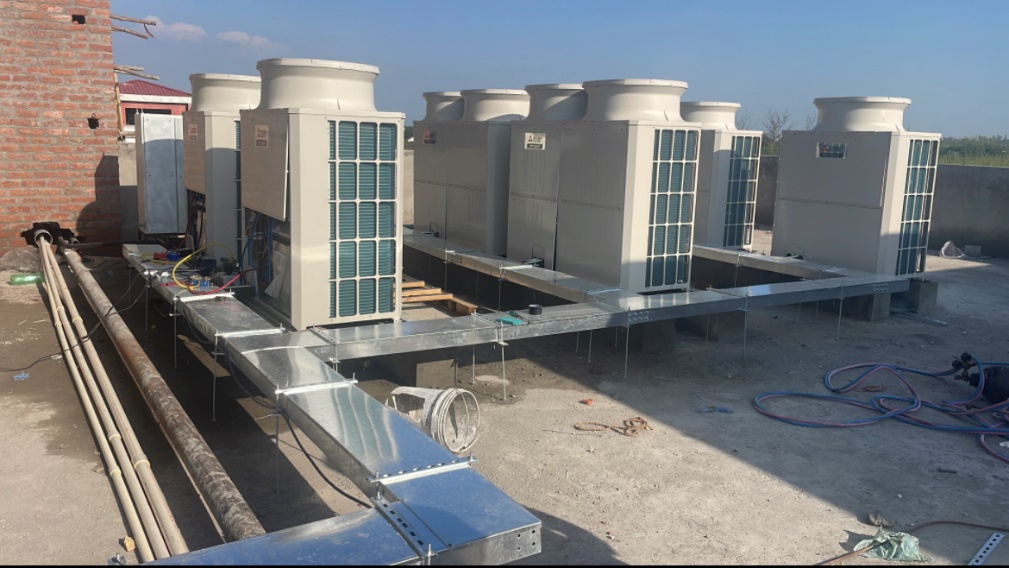

In today’s fast-paced world, businesses and industries require efficient climate control solutions to maintain optimal working conditions. Traditional HVAC systems often struggle with energy inefficiency, inconsistent performance, and high maintenance costs. However, smart HVAC systems are revolutionizing the way commercial and industrial spaces regulate temperature, humidity, and air quality.
By integrating automation, IoT (Internet of Things), and AI-driven controls, smart HVAC systems not only enhance comfort but also improve productivity and reduce operational expenses. Let’s explore how these advanced systems are making a difference.
Unlike conventional HVAC units that run on fixed settings, smart HVAC systems automatically adjust temperature, humidity, and airflow based on real-time data.
✅ Intelligent sensors monitor indoor conditions and adjust cooling or heating accordingly.
✅ Automated airflow control ensures consistent temperature distribution.
✅ CO₂ sensors regulate fresh air intake to maintain air quality.
By eliminating manual adjustments and inefficiencies, businesses can create a stable and comfortable environment, leading to improved employee performance and reduced downtime.
Poor indoor air quality (IAQ) can cause fatigue, headaches, and reduced concentration, directly impacting productivity. Smart HVAC systems tackle this problem by:
✔ Filtering pollutants and allergens to maintain fresh air circulation.
✔ Balancing humidity levels to prevent dryness or excessive moisture.
✔ Eliminating CO₂ buildup, which can lead to drowsiness and poor cognitive function.
Studies show that well-ventilated workplaces boost employee focus and efficiency, leading to higher overall productivity.
One of the biggest advantages of smart HVAC systems is their ability to optimize energy consumption.
🔹 AI-powered systems predict and adjust energy use based on occupancy and usage patterns.
🔹 Zoned climate control allows different areas to be heated or cooled independently, preventing energy waste.
🔹 Smart scheduling enables HVAC systems to operate only when needed, reducing unnecessary usage.
By implementing smart HVAC technology, businesses can cut energy bills by up to 30-50%, leading to significant cost savings.
With IoT-enabled HVAC systems, facility managers can monitor and control temperature, ventilation, and maintenance schedules from anywhere using a smartphone or computer.
📲 Real-time alerts notify users of system inefficiencies or faults.
📊 Cloud-based analytics provide insights on energy consumption and system performance.
🛠 Predictive maintenance detects issues before they become major problems, reducing downtime.
This level of remote control and automation ensures that HVAC systems run at peak efficiency, minimizing disruptions in workspaces.
Smart HVAC solutions are designed to meet the specific needs of different industries:
🏢 Offices & Workspaces – Enhances employee comfort and reduces energy waste.
🏨 Hospitality & Hotels – Provides personalized climate settings for guests.
🏭 Manufacturing & Industrial Facilities – Maintains temperature and humidity for process optimization.
🏥 Healthcare & Pharmaceuticals – Ensures sterile, controlled environments for sensitive operations.
🌱 Agriculture & Mushroom Farming – Regulates climate conditions to maximize crop yields.
By offering customized HVAC solutions, businesses can improve operational efficiency and workplace comfort.
Smart HVAC systems are more than just climate control solutions—they are productivity enhancers, cost savers, and sustainability drivers. With automated temperature regulation, improved air quality, energy efficiency, and remote control capabilities, they create healthier, more comfortable, and highly efficient spaces.
For businesses looking to boost productivity, reduce operational costs, and enhance workplace comfort, upgrading to smart HVAC solutions is the way forward.
Looking to install a smart HVAC system? Contact us today for expert solutions!
WhatsApp us